
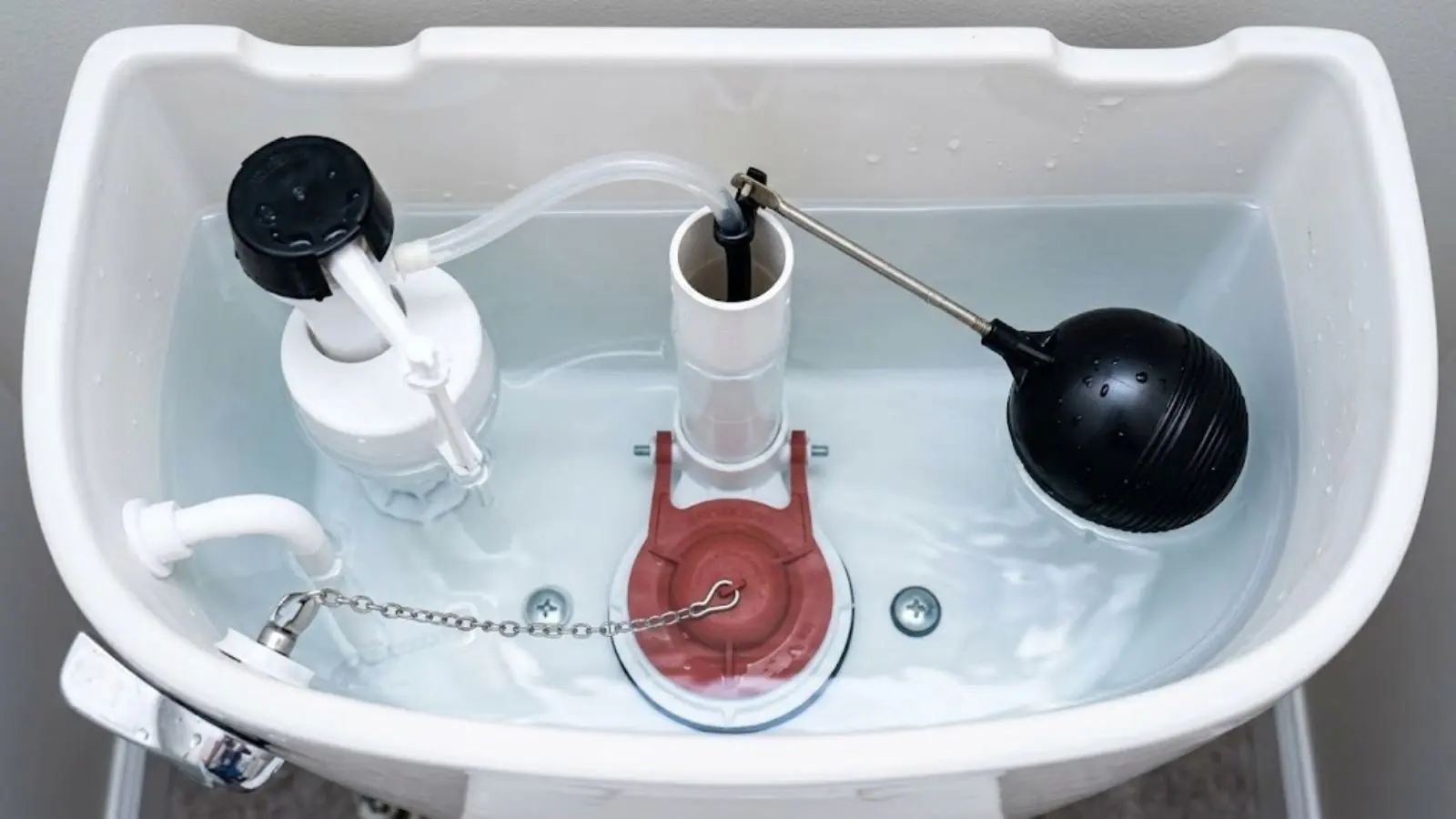
A running toilet is almost always a worn flapper, a chain with the wrong slack or a fill valve that no longer shuts off. You can check all three in about ten minutes, and the parts cost little. Left alone, a running toilet wastes water around the clock and can add noticeably to your bill.
The steps below go from the cheapest and most likely cause to the least. If the toilet still runs after all three, or the tank is cracked, call us and we will repair or replace it. See toilet repair and installation for what we handle.
Fix it in this order
Turn off the supply valve behind the toilet before you start, and flush to empty the tank.
- Lift the flapper and wipe the seat. Dirt or scale on the seat can stop a good seal.
- Check the chain. It should have a little slack, not so much that it tangles and not so little that it holds the flapper up.
- Replace the flapper if it is warped, soft or cracked. Match the size to your flush valve.
- Look at the water level. It should sit about an inch below the top of the overflow tube. If it rises over the tube, adjust or replace the fill valve.
- Turn the supply back on and test several flushes.
Symptoms and likely causes
Use this to decide what to check first.
| What you notice | Likely cause | Fix |
|---|---|---|
| Hissing after a flush | Fill valve not shutting off | Adjust or replace the fill valve |
| Tank refills on its own | Flapper leaking into the bowl | Replace the flapper |
| Water trickling over the tube | Water level set too high | Lower the float |
| Handle sticks | Chain or lever binding | Adjust or replace the lever |
| Cracked tank | Structural damage | Replace the toilet |
The dye test
To confirm a leaking flapper, add a few drops of food coloring to the tank and wait fifteen minutes without flushing. If color appears in the bowl, the flapper is leaking. This takes no tools and tells you whether the cheapest part is the problem.
Chloramine and rubber parts
According to the City of Southlake water quality report, the water comes from Fort Worth and chloramine is the disinfectant. Chloramine is common in Texas utilities. Some plumbers report that rubber flappers wear faster in chloraminated water, so look for flappers and seals advertised as chloramine resistant.
That is an ordinary practical choice rather than a requirement. If you replace the flapper every year or two, a different material may last longer.
Source type: City of Southlake water quality report, plus general plumbing practice.
When to stop and call
If you replaced the flapper and fill valve and the toilet still runs, the flush valve seat may be worn or pitted, which needs more than a part swap. A rocking toilet, water at the base or a cracked tank also calls for a plumber. Overflowing toilets are covered in our guide to drain cleaning.
If a toilet overflows, close the valve behind it first and call. We answer the 24/7 line at any hour.
Parts to buy and what to skip
A universal flapper fits many toilets but not all. Check the flush valve size, usually two or three inches, before buying. A complete fill valve kit is inexpensive and often easier than adjusting an old one. Skip drop-in tank tablets, because the chemicals attack rubber and shorten the life of the parts you just installed.
Keep the old flapper until the new one works, so you can compare the shape if the fit is off.
Why it matters beyond the bill
A toilet that runs constantly also wears the fill valve and can mask a bigger problem, such as a leak at the base. If water collects around the toilet, see our toilet repair and installation page. A leak at the floor can soften the subfloor, and that is harder to fix than a flapper.
A quick preventive routine
Once or twice a year, lift the tank lid and look at the flapper, the chain and the fill valve. Wipe mineral buildup from the flapper seat. Check that the water level sits below the overflow tube. Flush a few times and listen for hissing afterward. This takes five minutes and catches small problems before they waste water. If any part looks brittle or warped, replace it then, not after a leak appears.
Keep a spare flapper and a fill valve kit in the hall closet. Both are inexpensive, and having them on hand turns a nighttime annoyance into a five minute fix instead of a trip to the store.
Toilet still running? Call for repair.
Call (817) 601-6266Running toilet questions
It depends on the leak, but even a slow leak can add up to thousands of gallons over a month.
Many homeowners do. If you are not comfortable, a plumber can do it quickly.
A slow leak at the flapper lets the tank drop until the fill valve kicks on.
It does not stop a toilet from working, but it can shorten the life of some rubber parts.
Yes, see Keller.