
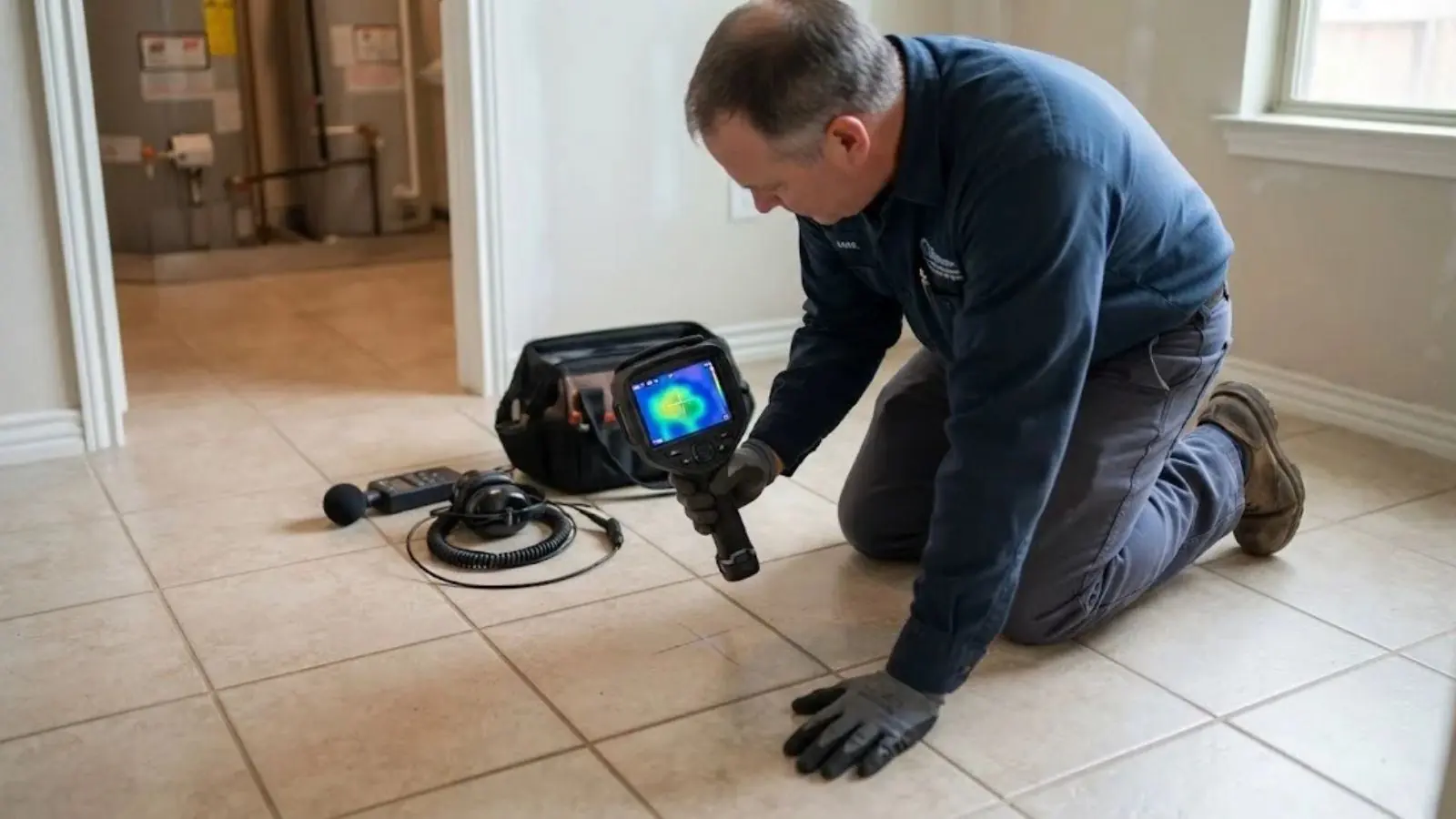
Leak detection is the process of locating a water leak without opening floors or walls blindly, using acoustic listening, thermal imaging, pressure testing and tracer gas. If water is escaping now, our emergency leak detection line is open 24/7 at (817) 601-6266. Close the main valve, switch off the water heater if the leak is near it and keep people away from wet electrical areas.
Most leak calls in Southlake start with a symptom, not a diagnosis: a meter that keeps turning, a water bill that crept up, a stained ceiling or a warm spot on the floor. We start from that symptom and work toward the source. Our crews also cover Keller and nearby addresses.
Check your meter in five minutes
According to the City of Southlake, residents should check the water meter with every faucet closed. If it shows flow, you may have a leak.
- Make sure no fixture, ice maker, irrigation zone or appliance is using water.
- Open the meter box and find the small leak indicator or the sweep hand.
- If the indicator spins or the digits advance, water is leaving the house somewhere.
- Close the main valve at the house. If the meter stops, the leak is inside. If it keeps moving, the leak is between the meter and the house.
- Call and tell us what you saw. That single test shortens the search.
Signs of a hidden leak
Water leaks announce themselves in quiet ways:
- A water bill that rises with no change in use.
- A meter that moves with everything off.
- Sound of running water at night when no one is using it.
- Warm spots on the floor, damp carpet or buckling flooring.
- Stained ceilings, bubbling paint or a musty smell in a wall.
- Low pressure that appears suddenly.
When a leak is an emergency
A pinhole in a supply line can run for weeks, but some leaks cannot wait. Treat water in a ceiling, water near electrical panels, a leak in a wall cavity after a freeze, or any leak you cannot slow by closing a valve as urgent. Close the main valve and call the 24/7 line.
In February 2021 Southlake issued a boil water notice on February 16 and lifted it on February 21, and city crews helped residents shut off water at homes and businesses with line breaks. A leak that shows up after a deep freeze is common, and finding it quickly limits the damage.
How we find the leak
The tool depends on where the water is hiding.
| Method | What it finds | When we use it |
|---|---|---|
| Acoustic listening | Sound of water escaping a pressurized pipe | Slab, buried line and wall leaks |
| Thermal imaging | Temperature differences from hot water or wet materials | Hot line leaks, wet ceilings and floors |
| Pressure testing | Pressure drop in an isolated line | Confirming a leak exists on a section |
| Tracer gas | Escaping gas through soil, slab or drywall | Hard-to-hear leaks and small pinholes |
| Moisture meters | Moisture in drywall, wood and flooring | Mapping the extent of damage |
Ceiling and wall leaks
A stain on a ceiling is where water landed, not necessarily where it started. Water travels along joists and pipes before it shows. We trace it back through the attic, the wall and the fixtures above, and we often find supply lines, drain connections, a shower pan or an air handler drain.
Finding the exact source avoids cutting multiple holes in drywall. Repairs follow once the source is confirmed, and our burst pipe repair team handles failed lines.
Under-house, buried and yard leaks
Homes on pier and beam foundations or with crawlspaces can leak where no one looks for months. Buried lines between the meter and the house leak into soil, so the surface may only show a soft spot or a greener lawn strip. Locating them with acoustic equipment spares the yard.
Irrigation lines and meter-box fittings are separate leak sources that we check when the meter runs and nothing in the house explains it. If you have a pool or spa, tell us, because a leak there can mimic one in the plumbing. Slab-level leaks are covered on the slab leak repair page.
Meter spinning or bill climbing? Call and describe it.
Call (817) 601-6266What changes the cost
Leak detection is priced for the investigation and then the repair.
- Number of areas to checkA single wall is quicker than an entire floor plan.
- Access to the suspected areaFinished slab, tile and cabinets affect access.
- Type of leakPressurized supply lines and drain leaks need different methods.
- After-hours serviceNights and weekends carry after-hours rates, stated before work starts.
- Repair scopeFinding the leak is separate from repairing it, and we explain both.
Water damage coverage varies by policy, and most insurers want documentation of the source. Our leak report gives you the evidence. Call (817) 601-6266 for your real number.
Leak detection questions
Yes. Our line is answered 24/7, and an active leak gets priority on the schedule. Close the main water valve before we arrive.
Often yes. Acoustic and thermal tools narrow the location so only a small area needs to be opened.
It might. Check the meter with everything off. If it moves, a leak is likely. Irrigation, a running toilet or a seasonal change in use can also explain a bill increase.
We check irrigation lines and valves when they are a likely source. Tell us if a zone runs on a timer when the meter spins.
Yes. Our commercial plumbing page explains how we handle businesses and property managers.