
A slab leak is a leak in a water or drain line running beneath or inside the concrete foundation. If water is rising through flooring or you hear water running with everything off, call our 24/7 emergency line at (817) 601-6266 and shut off the main water valve. While you wait, move belongings off the floor, switch off power to wet areas and photograph the damage for your insurer.
Southlake Express Plumbing dispatches plumbers who locate the leak precisely before any concrete is cut. We serve Southlake and Keller, where many homes sit on slab foundations.
Why slab leaks happen in North Texas
According to the Texas Department of Licensing and Regulation, expansive soils shrink and swell with changes in moisture, so wet soils heave while dry soils settle. That movement stresses a foundation and the pipes embedded in or under it. Pipes can rub against concrete, bend at joints or crack when the slab shifts.
Add water chemistry and age. According to the City of Southlake water quality report, pH is 8.1 to 8.5, total hardness is 6 to 10 grains per gallon and chloramine is the disinfectant. Over decades, copper pipe can develop pinholes. Most Southlake homes were built after the early 1990s, so many plumbing systems are now old enough for these failures to appear.
Signs of a slab leak
These are the clues we hear about most often:
- A warm or hot spot on the floor, particularly over a hot water line.
- The sound of running water when no fixtures are on.
- A sudden increase in the water bill or a meter that moves with everything off.
- Cracks in tile or grout lines, damp carpet or buckled wood flooring.
- Reduced hot water pressure or a water heater that runs constantly.
- Water seeping at the base of walls or along the slab edge in a garage.
When a slab leak is an emergency
Treat it as urgent if water is visible on the floor, if the leak is on a hot line, or if the meter spins quickly. A leak under the slab can wash out soil and soften the base. It also wastes hundreds of gallons a day. Close the main valve and call, even if it is the middle of the night.
What to do before we arrive
Simple steps limit damage until a plumber arrives.
Repair options for a slab leak
The right fix depends on the pipe, the location and the age of the system.
| Option | How it works | Best fit |
|---|---|---|
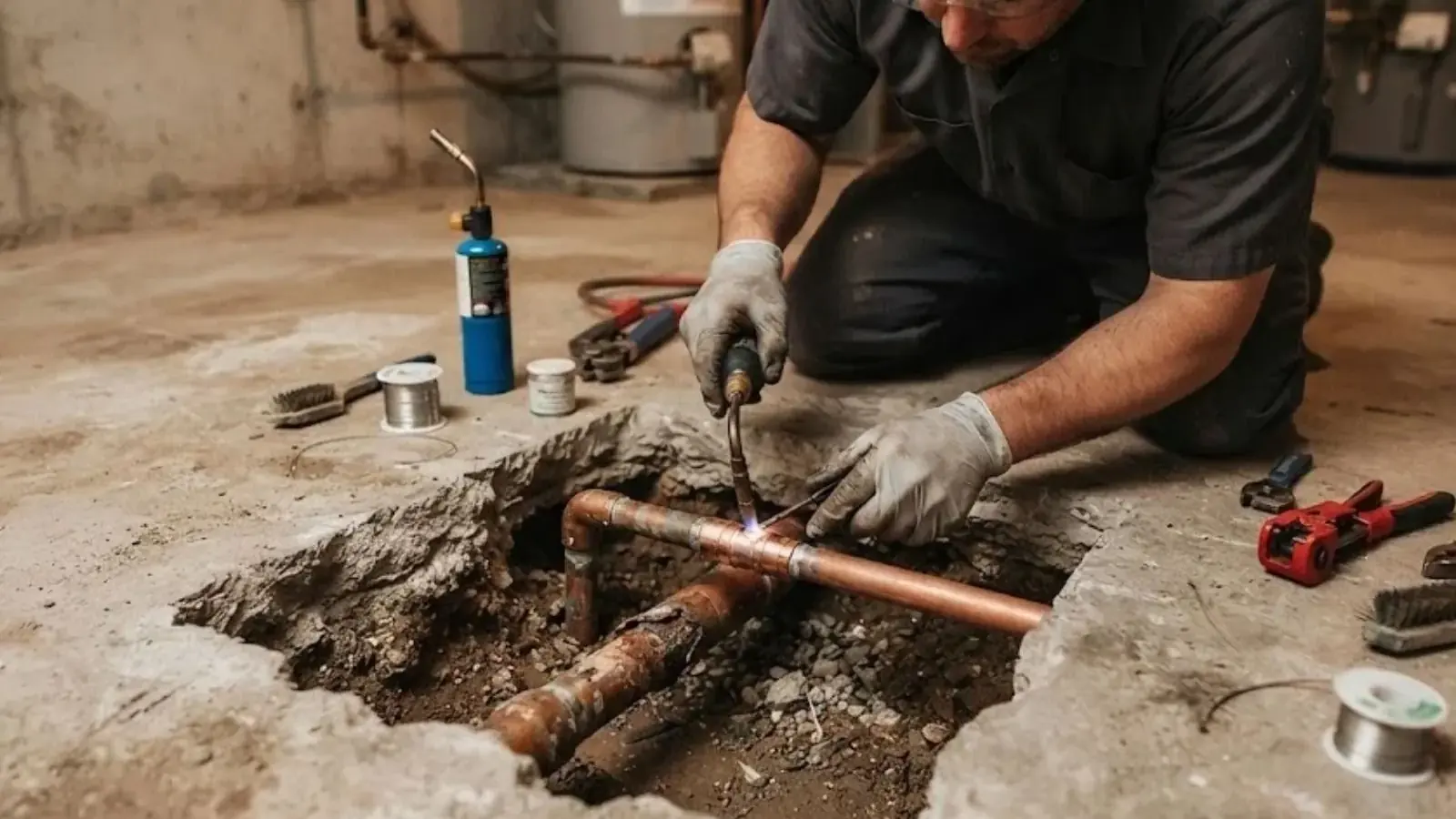
| Spot repair | Cut a small opening through the slab at the leak and replace the damaged section | One accessible leak in otherwise sound pipe |
| Reroute | Abandon the leaking line and run a new one through walls or attic | Repeated leaks or hard-to-reach lines |
| Repipe | Replace the affected supply lines throughout the home | Widespread corrosion or repeated failures |
| Pipe lining | Coat the inside of a line with a resin where applicable | Select lines when access is limited |
We explain which options apply to your layout before you decide. A whole house repipe is covered on its own page.
Is it the slab or the water heater?
Garage leaks near the water heater are easy to misread. Water at the edge of the slab can come from the heater, a supply line, or the slab itself. We check the heater, test lines and use acoustic equipment to separate them. Our water heater repair crew can fix the heater side if that is the source.
Hearing water under the floor? Call us now.
Call (817) 601-6266What changes the cost
Every slab leak is different.
- Leak locationUnder a kitchen island is a different job from a hallway or a garage.
- Floor finishTile, hardwood and carpet affect restoration scope.
- Repair methodSpot repair, reroute and repipe differ widely in scope.
- Pipe conditionCorroded lines raise the odds of repeated leaks and may favor a larger repair.
- After-hours serviceAfter-hours rates are stated before work starts.
Homeowner policies vary on slab leak coverage. Ask your insurer about water damage and access costs, and keep our written findings. Call (817) 601-6266 for your real number.
Slab leak questions
Yes. The line is open 24/7. Close the main valve, call and we will book the earliest appointment available.
Usually only a small area over the leak, once the location is confirmed. Rerouting can avoid cutting the slab entirely.
A small leak can run for weeks, but it wastes water and can undermine soil and flooring. Fast action is cheaper.
Leaking water can soften soil around a foundation. Ask a structural professional if you see cracks or movement.
Yes. Keller is part of our daily coverage.