
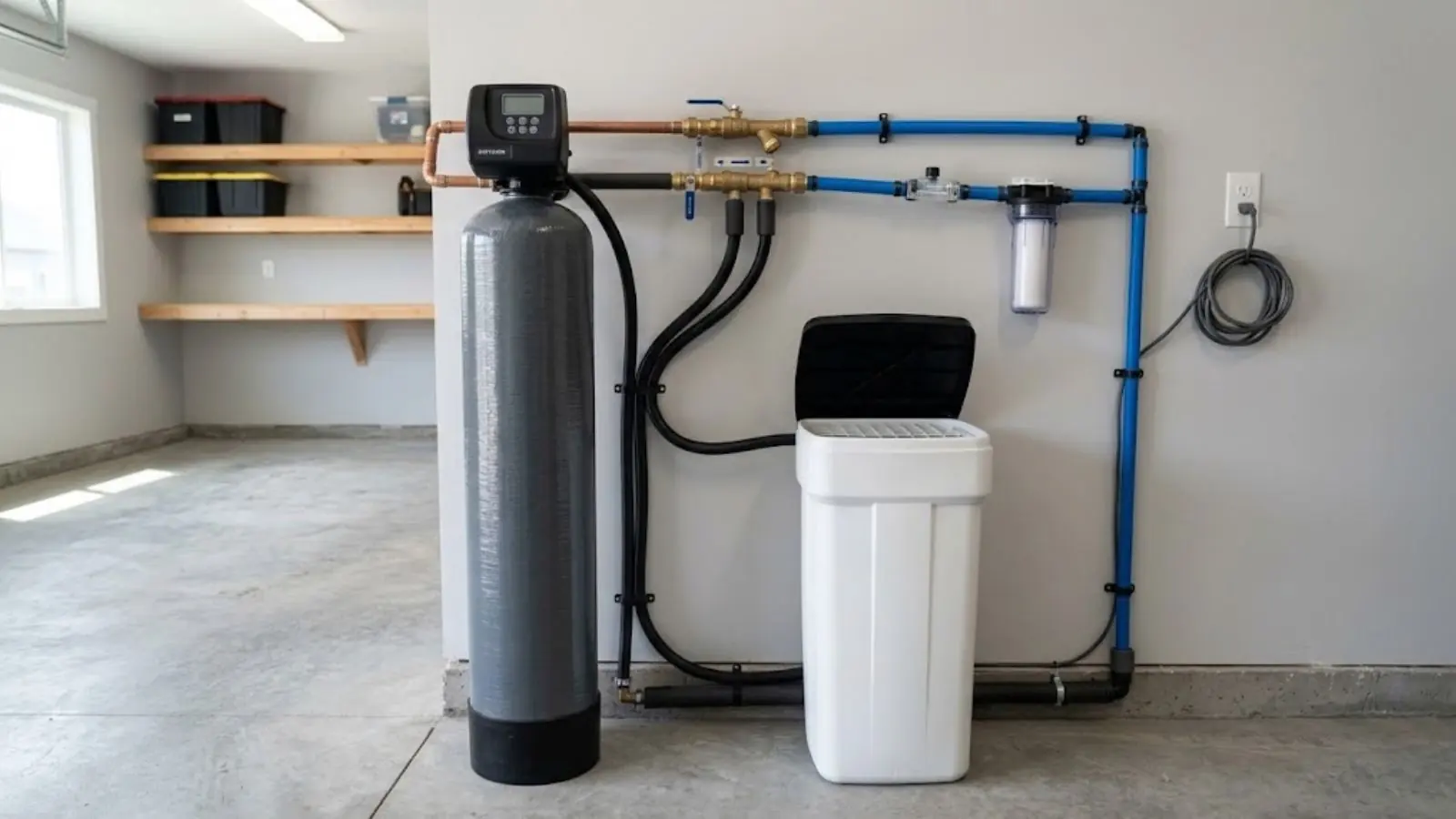
A water softener removes the minerals that cause scale, and a filter removes taste, odor or sediment. Both protect fixtures and appliances, and the right choice depends on what you actually see at home. Call (817) 601-6266 to schedule, and we explain what applies to your water before recommending equipment.
Southlake Express Plumbing installs and services systems in Southlake and Keller. The City of Southlake publishes annual water quality reports, so we start from real local data.
What Southlake water looks like
According to the City of Southlake water quality report, total hardness is 6 to 10 grains per gallon. By common classification that is moderately hard to hard water. It will leave spots on glass, scale on faucets and a crust on heating elements over time.
That matters most for water heaters. Scale on elements and at the bottom of a tank reduces efficiency and shortens life. If your heater is aging, see water heater repair and water heater replacement.
Signs of hard water
You may notice:
- White crust on faucets and showerheads.
- Spots on dishes and glass.
- Soap that does not lather well.
- Dry skin or dull laundry.
- A water heater that runs loud or slowly.
- Reduced flow from clogged aerators.
Softener or filter
They solve different problems.
| System | Treats | Does not treat |
|---|---|---|
| Salt-based softener | Hardness and scale | Chlorine taste or odor |
| Carbon filter | Chlorine taste and odor | Hardness |
| Sediment filter | Sand and particles | Dissolved minerals |
| Whole-house combination | Scale and taste together | Specific contaminants without testing |
Sizing a system
Size depends on household water use and hardness. An undersized softener regenerates too often and wastes salt. An oversized one wastes money. We size to your home, put the system where the main line enters and make sure there is a drain and power nearby.
Maintenance
Salt-based softeners need salt refills and occasional cleaning. Filters need cartridge changes on a schedule. We explain the routine up front so you know the ongoing cost, and we can service systems that were installed by others.
Testing before you buy
A simple test shows hardness, and a lab test is worth it if you have specific concerns about contaminants. We do not make health claims. For health-related questions about water quality, a doctor or the local water utility is the right source.
Whole-house or point of use
A whole-house system treats every tap and protects the water heater, which is where scale does the most expensive damage. A point-of-use filter at one tap, such as a drinking water filter under the kitchen sink, treats only that tap. Many homes combine the two. We recommend based on what bothers you, not on the largest system available.
Installation details
A softener installs near the main line after the shutoff and before the water heater, with a bypass so water keeps flowing during service. It needs a drain for regeneration water and an outlet for the controller. We also set the hardness and regeneration schedule, and we show you how to refill salt. Outdoor spigots are usually left untreated to save salt.
What to ask any installer
Ask what hardness the system is sized for, how often it regenerates, how much salt it uses and what warranty applies. Ask where the drain water goes. A clear answer to each means the installer sized the system, not guessed. We answer those questions before you commit to anything.
Fighting scale? Ask about a water treatment visit.
Call (817) 601-6266What changes the cost
Pricing follows the system and the install.
- System typeSofteners, filters and combinations differ.
- Household sizeLarger homes need larger systems.
- Existing plumbingTight or older setups add work.
- Drain and electrical accessNeeded near the unit.
- Service plansSalt and cartridges are ongoing costs.
Call (817) 601-6266 for your real number.
Water softener questions
According to the City of Southlake water quality report, total hardness is 6 to 10 grains per gallon.
It depends on how much scale and spotting bothers you. Hardness at this level is noticeable but not extreme.
Properly set systems add very little sodium, but a filter handles taste.
Yes, we can inspect and service most systems.
Yes, see Keller.