
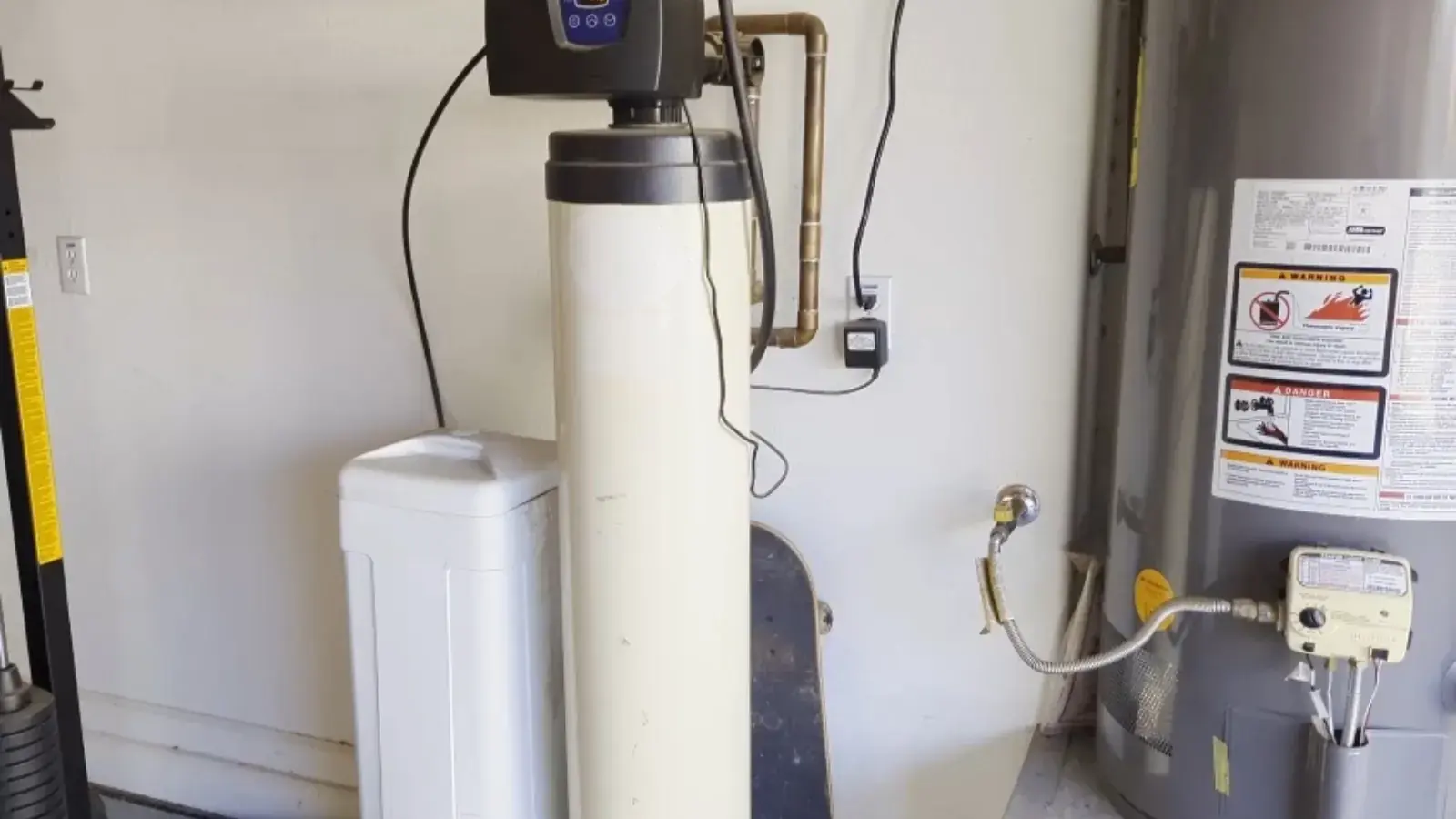
Getting a water softener installed starts with your water. Measure or look up your hardness, count the people in the home and decide where the unit will sit. A softener also needs a nearby drain, an electrical outlet and space for a salt tank. A licensed plumber handles the connection to the main line and the drain.
This guide walks through the steps and the numbers so you know what to expect. For install help, see our water softener and filtration page.
The Southlake numbers
What the local report says.
A softener removes hardness minerals, not chloramine.
How sizing works
Sizing multiplies the number of people by typical daily water use and by your hardness. The result is the grains the unit must remove between regenerations. A properly sized softener regenerates every few days, not every day and not once a month. An undersized unit wears out quickly. An oversized one wastes salt and water.
We calculate this for your home and recommend a size. Bring your last water bill if you have one.
Installation steps
What the plumber does:
- Choose a spot on the main line after the meter and before the water heater, with room for the unit and salt tank.
- Shut off the water and install a bypass valve so you can isolate the softener.
- Connect the inlet and outlet to the main line, and run a drain line to a floor drain or standpipe.
- Plug in the controller and program the hardness and the regeneration schedule.
- Add salt, start a regeneration cycle and check every connection for leaks.
- Show you how to bypass the unit and how to refill the salt.
What a softener needs from your home
Make sure you have:
- A nearby floor drain, laundry standpipe or approved drain connection.
- A grounded outlet within reach of the controller.
- Level floor space for the unit and brine tank.
- Access to the main line before the water heater.
- Room for a bypass valve.
What the local facts mean
Moderately hard water at 6 to 10 grains per gallon will not stop a home from working, but it leaves scale in heating elements, shows spots on glass and shortens the life of some fixtures. A softener trades the calcium and magnesium for sodium or potassium, which is why salt is part of the routine.
Keller buys its treated water from Fort Worth as well, so the same numbers apply to homes in Keller. Neither Southlake nor Keller needs a softener to meet a standard. It is a comfort and maintenance choice, and some homeowners choose a filter instead.
Source type: City of Southlake and City of Fort Worth water quality reports, City of Keller water conservation plan.
Salt, maintenance and the drain
Check the salt every month or two and keep it above the water level. Clean the brine tank occasionally. Never block the drain line. A softener regenerates by flushing brine through the resin, so the drain must carry the discharge away. Some cities limit brine discharge to sewers, so ask before connecting. The City of Southlake can confirm rules at Building Inspections, 817-748-8236.
Before you decide
Ask yourself what you want to improve. If it is scale on fixtures and appliances, a softener fits. If it is taste or odor, a filter fits. If it is both, a combination of the two is common. Read water heater repair if scale is already causing problems with your heater.
Common questions at the install
Homeowners ask whether the outdoor faucets will be softened. We can leave them on a hard line to save salt. They ask whether the softener affects water pressure. A properly sized unit has little effect. They ask whether the water will feel slippery. Soft water feels different from hard water, and most people adjust within days.
Preparing your home for the visit
Clear the area around the main line and the drain. Move boxes and shelves. Know where the main shutoff is. Have your water bill handy if you want to discuss usage. If the softener will sit in a garage, make sure the space is protected from freezing, since Texas cold snaps can damage the brine tank and the controller. Tell the plumber if the location has been prone to flooding.
A good installer walks through the site before quoting, so there are no surprises on the day of the install.
After the first week
Check the salt level, listen for the regeneration cycle and watch the drain for leaks. Test your water hardness again with a simple kit to confirm the unit is working. If your water still feels hard, the controller may need adjusting. Call the installer, since most settings are quick to change.
Ready to install a softener? Call to schedule a visit.
Call (817) 601-6266Water softener installation questions
Often a few hours for a straightforward install.
To a floor drain, laundry standpipe or another approved drain connection.
Rules can vary. Call Building Inspections at 817-748-8236 to confirm.
Softened water reduces scale on heating elements and tanks.
Yes, see Keller.