
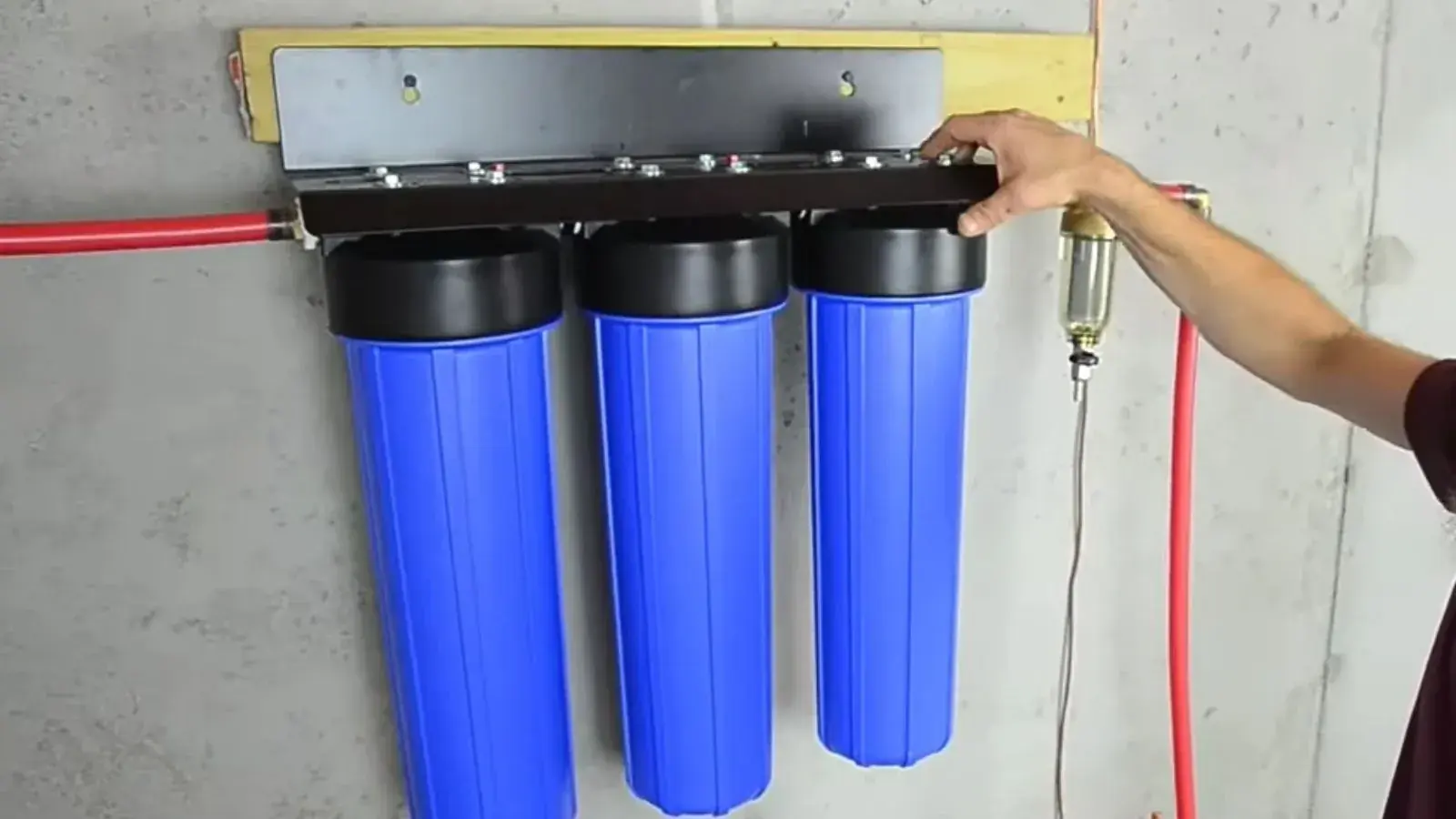
Installing a water filtration system begins with one question: what do you want to fix? A filter that removes sediment will not fix chlorine taste. A carbon filter will not soften hard water. Choosing by the problem, not by the brand, saves money and avoids disappointment. This guide explains the common types, where each one installs and what to ask a plumber.
For installation help in Southlake and Keller, see our water softener and filtration page.
Match the filter to the goal
Each type targets a different problem.
| Goal | Common solution | Where it installs |
|---|---|---|
| Particles and sediment | Sediment filter | Main line, whole house |
| Taste and odor | Carbon filter | Whole house or under the sink |
| Scale and spotting | Water softener | Main line, whole house |
| Drinking water quality | Under-sink or counter system | At one tap |
| Specific contaminant | Treatment chosen after testing | Depends on the contaminant |
Whole house or one tap
A whole-house system treats every tap, protects the water heater and appliances and avoids filter housings under every sink. A point-of-use system treats the drinking water only, costs less and installs quickly. Many homes combine them, with a softener or sediment filter at the main and a drinking water filter at the kitchen sink.
Choose a whole-house system when the problem affects the whole home, such as scale on fixtures. Choose point of use when you want better drinking water without touching the rest.
What an installation looks like
The usual sequence for a whole-house filter:
- Locate the main water line after the meter and shutoff.
- Choose a spot with room for the housing, a bypass and cartridge changes.
- Shut off the water, cut the line and install fittings, a bypass and unions.
- Mount the housing, connect it and open the valves slowly.
- Flush the system, check every joint and set a reminder for the first cartridge change.
What is in the water to begin with
The City of Southlake buys its water from Fort Worth Water, and, according to the water quality report, chloramine is the disinfectant and total hardness is 6 to 10 grains per gallon. Those two facts shape the choice.
Chloramine is more stable than chlorine, so a basic carbon filter may remove less of it. If taste or odor is your goal, ask whether the filter is rated for chloramine. If scale is your goal, a filter alone will not help and a softener is the right tool. We do not make health claims about water, so for health questions, ask a doctor or the water utility.
Source type: City of Southlake and City of Fort Worth water quality reports.
Questions to ask an installer
Bring this list:
- What problem will this system solve in my home?
- What is it rated to remove, and who tested it?
- How often do cartridges change and what do they cost?
- Where will the system sit and will there be a bypass?
- What happens to water pressure and flow?
- What is covered by the warranty and what is not?
Maintenance you cannot skip
Filters work only when they are fresh. A clogged cartridge slows flow and can grow bacteria on its surface, which defeats the purpose. Put the change date on a calendar. Keep spare cartridges on hand. If your pressure drops, change the filter first before assuming a plumbing problem.
Systems with a bypass let you service the filter without shutting off water to the whole home. Ask for one.
Do it yourself or call a plumber
Under-sink systems are often a weekend project. Whole-house systems require cutting the main line, soldering or using push fittings, and sometimes adding a drain. A leak at the main is a major repair, so hire a plumber if you are not experienced. Texas also licenses plumbers, so ask for the Responsible Master Plumber license number.
If you want a system sized and installed properly, call us. See also plumbing installation.
Testing before you buy
A basic test shows hardness and chlorine levels. A lab test is the right tool if you have a specific concern. Test your tap water before choosing a system, so you buy a solution for a measured problem. Your utility also publishes an annual water quality report you can read for free.
Matching flow and pressure
A filter that is too small restricts flow when several fixtures run at once. Check the rated flow against the demands of your home, especially for a whole-house unit. Check the pressure drop across the filter when new and when the cartridge is dirty. A well-sized filter has little effect on pressure when fresh.
If your home already has marginal pressure, say so, and ask whether a larger housing or a different filter style fits better.
Under-sink systems and the kitchen tap
Many homeowners start with a filter for drinking and cooking water. These systems tee into the cold line under the sink and feed a dedicated tap or the main faucet. They are compact and affordable. Plan where the cartridges will be changed, because cramped cabinets make filter changes a chore. Ask for a model with easy twist-off cartridges.
Want help choosing a filter? Call for a water treatment visit.
Call (817) 601-6266Water filtration questions
No. Softening needs ion exchange, which a softener provides. Filters remove particles, taste and odor.
The city's water quality report lists chloramine as the disinfectant.
Follow the manufacturer. Many change every few months to a year.
On the main line after the shutoff and meter, with a bypass.
Yes, see Keller.