
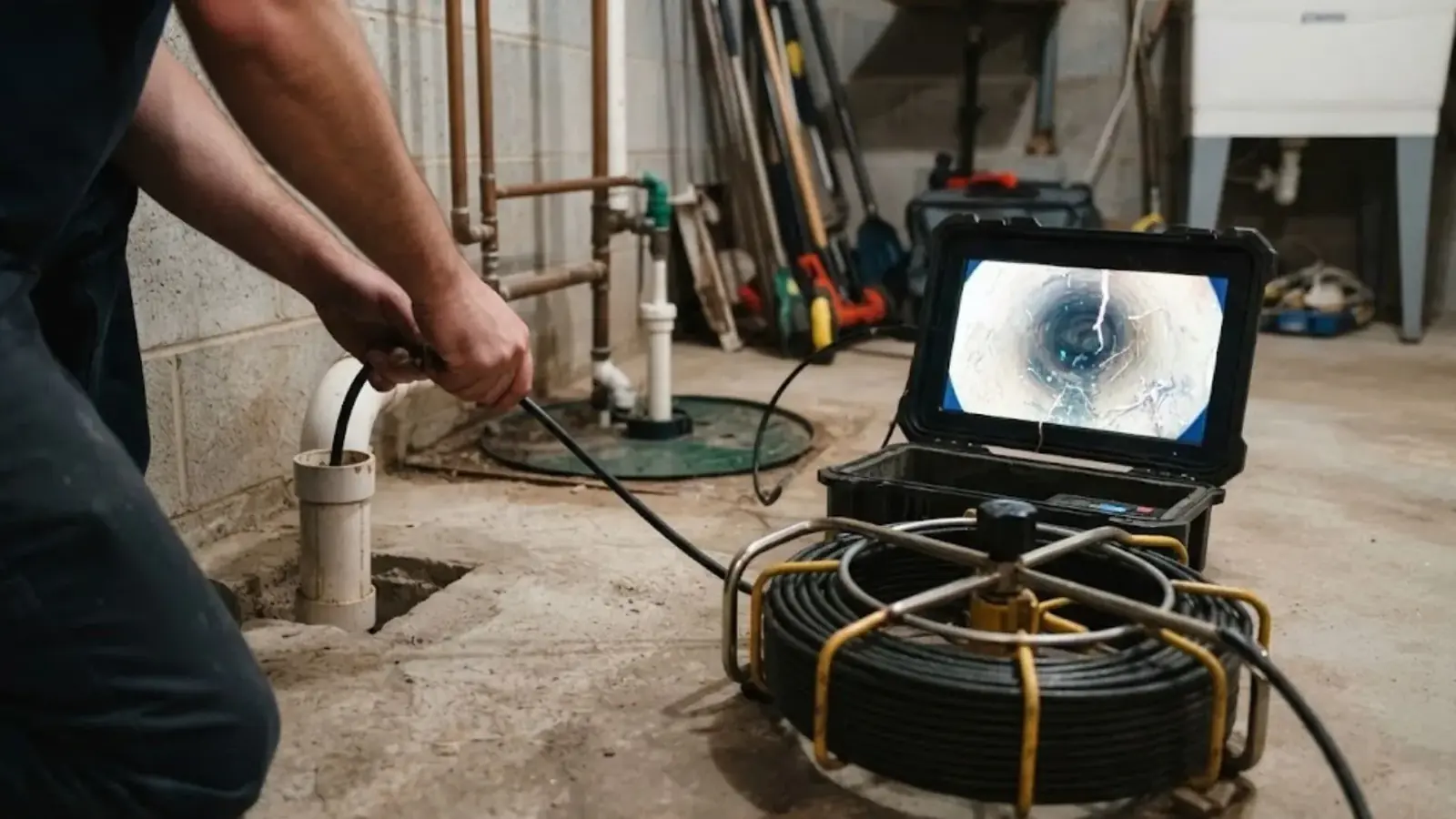
A sewer inspection uses a waterproof camera on a flexible cable to record the inside of your sewer line, showing roots, cracks, sags, offsets and buildup. It answers the question every repeat clog raises: what is actually wrong. We perform inspections in Southlake and Keller and explain the footage in plain language.
This page covers planned inspections. If sewage is backing up now, our emergency sewer line repair page is the better starting point.
When an inspection is worth it
A camera is worth the cost in these cases:
- A drain clogs more than once a year.
- You are buying or selling a home with older plumbing.
- Trees stand near the sewer route.
- A snake stalled partway or returned with roots.
- You hear gurgling or smell sewer gas.
- You plan a landscaping or pool project over the line.
What a camera can find
Each finding leads to a different plan.
| Finding | What it means | Likely next step |
|---|---|---|
| Roots at joints | Entry points letting roots grow in | Jetting and possibly lining |
| Cracks or breaks | Structural damage | Spot repair or lining |
| Belly or sag | Low spot holding water | Replace the section |
| Offset joint | Pipes pulled apart or misaligned | Repair |
| Grease or scale | Buildup narrowing the pipe | Cleaning |
Inspections for buying or selling a home
A standard home inspection does not typically include a sewer camera. A line can look fine at the surface and hide a failure that costs thousands. Buyers often use an inspection to negotiate. Sellers use one to avoid surprises after an offer.
We provide video and a written description of what the camera saw. We do not guess at what we cannot see, and we tell you if access limits the inspection.
How we run an inspection
We access the line through a cleanout, push the camera along the pipe and record. If the line is blocked, we clear it first. We note the footage depth so a repair can target the right spot, and we can locate the line from above with a receiver when needed.
Southlake grew quickly after the early 1990s, so many lines are likely PVC, but inspection findings vary.
Reading the results
A clean line with smooth joints and steady slope needs nothing beyond routine care. Roots and grease point to cleaning, often hydro jetting, and a recheck later to see whether they return. Cracks, belly sections and offsets point to repair, and the footage shows how far the damage extends so the scope is not a guess.
Findings are not always dramatic. Many inspections end with a simple plan to maintain the line, and that is a good outcome worth paying for before a purchase or a remodel.
Before a landscaping, pool or addition project
Digging over an unmapped sewer line is how lines get cracked. A camera with a locator marks the route and depth so contractors can avoid it or plan around it. Share the plans with us when you call, and we point out where the line runs relative to the work.
What we do not claim
A camera shows the inside of the pipe, not the soil around it. It cannot tell you how long a line will last, and it cannot see past a full blockage or a severe collapse. When access limits what the footage shows, we say so in the notes instead of filling the gap with a guess. You can then decide whether a cleaning and a second pass is worth it.
Want to know what is in your line? Book an inspection.
Call (817) 601-6266What changes the price
A camera visit is priced for time and access.
- Length of lineLonger lines take longer.
- Cleanout accessMissing cleanouts add work.
- Cleaning firstA blocked line must be cleared before filming.
- Locating and mappingMarking the line from above adds a step.
- After-hours serviceRates are stated before work starts.
Call (817) 601-6266 for your real number.
Sewer inspection questions
Usually under an hour when access is good. Longer lines or blockages add time.
Yes, we can share the footage and a summary of the findings.
Yes. Many buyers schedule an inspection during the option period.
Yes. The line is open 24/7 and we book the earliest appointment available.
It can show cracks and offsets, and leak detection covers supply lines.