
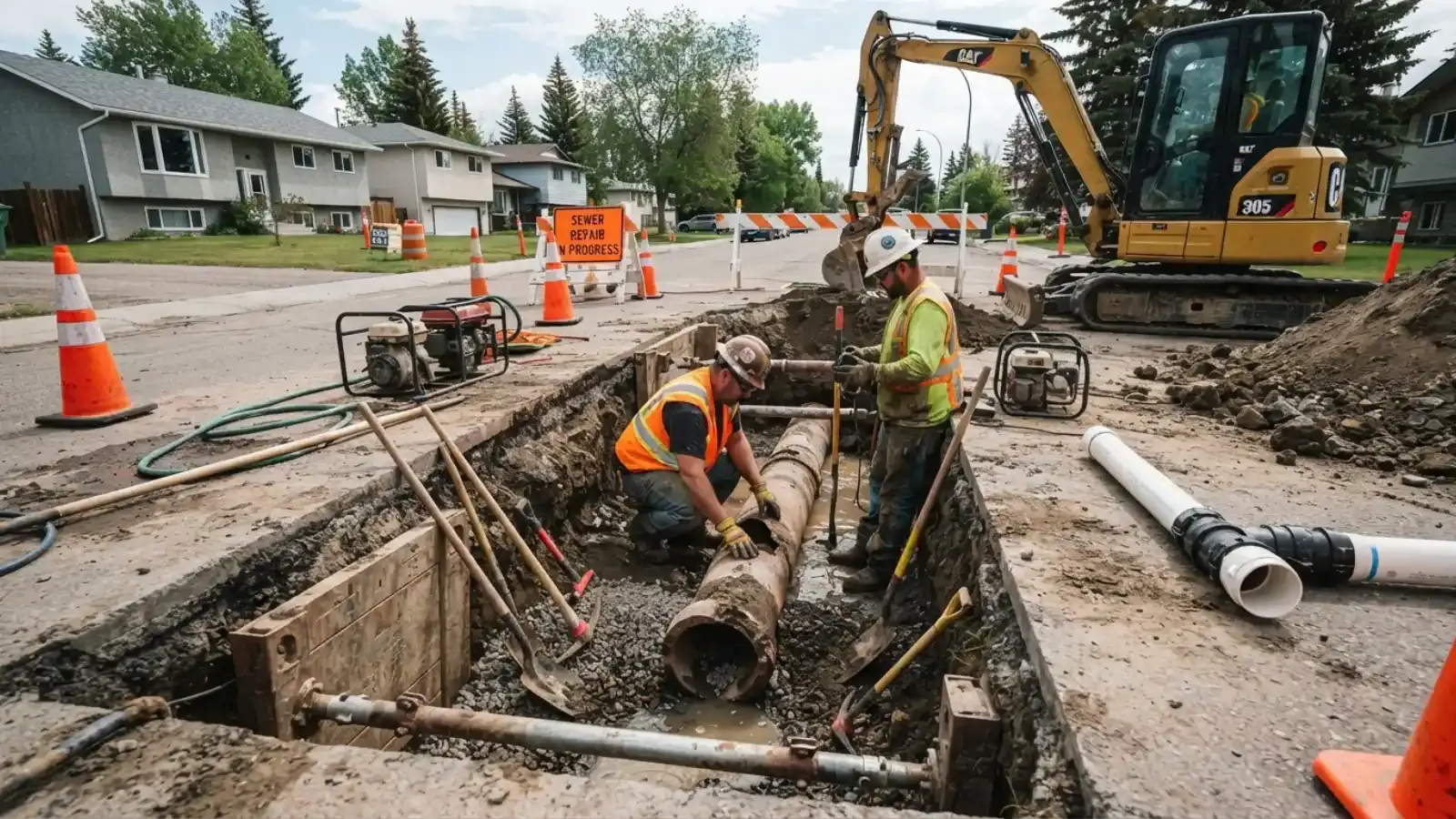
Sewer line repair fixes or replaces the pipe that carries wastewater from your home to the city main or septic system. If sewage is backing up into tubs or floor drains, call our emergency sewer line at (817) 601-6266, open 24/7. Stop water use, keep everyone away from the wet area and avoid chemical cleaners.
A licensed plumber from Southlake Express Plumbing diagnoses the line with a camera before recommending repair. We serve Southlake and Keller, and we explain every option, including spot repair, pipe lining and full replacement.
Signs of a damaged sewer line
Look for these patterns:
- Multiple drains back up at the same time.
- Gurgling toilets or bubbling in tubs.
- Sewage odor indoors or in the yard.
- Soft or sunken spots in the lawn over the line.
- Frequent clogs that return after cleaning.
- Cracks or wet spots in the slab near the line.
When a sewer backup is an emergency
A sewer backup contaminates materials and can make rooms unsafe. If sewage is on the floor, stop using water, shut off the washer and call the 24/7 line. Keep children and pets away and avoid walking through it. Document the damage for your insurer.
Repair options
The right fix depends on what the camera finds.
| Option | What it does | When it fits |
|---|---|---|
| Spot repair | Replace a short damaged section | Localized crack or offset |
| Trenchless pipe lining | Cures a new liner inside the old pipe | Structurally sound pipe with cracks or root entry |
| Full replacement | Replace the line, by trench or by pipe bursting | Collapsed, bellied or heavily damaged pipe |
| Cast iron repair | Replace sections or sleeve | Older cast iron under the home |
Pipe lining and trenchless repair
Pipe lining inserts a resin-coated liner into the existing pipe and cures it in place, creating a pipe inside a pipe. It spares landscaping and driveways. It does not fix a collapsed pipe or a severe low spot. A camera inspection tells us whether lining is practical.
Trenchless methods can reduce digging, though access pits are still needed. We explain what will be disturbed before you decide.
Why Southlake sewer lines fail
Most Southlake homes were built after the early 1990s, so many sewer lines are likely PVC and not old cast iron. PVC resists corrosion, but roots enter at joints and soil movement can shift pipe. According to the Texas Department of Licensing and Regulation, expansive soils shrink and swell with moisture, which can push pipe out of alignment.
Older homes and some other cities in the metro still have cast iron or clay. In those, corrosion and root intrusion cause most failures. If you are unsure whether your home is on city sewer or septic, tell us when you call.
Backups versus slow drains
A single slow sink is usually a local clog and is covered under drain cleaning. A main line problem affects the lowest fixtures first and tends to recur. If cleaning keeps failing, hydro jetting and a camera show the cause.
What happens on the first visit
We start by listening to what you have seen: which drains are slow, when the backup started and whether a cable has been run before. Then we locate the cleanout, clear the line enough to pass a camera and record the pipe. You see what we see, and we mark the depth of any damage so the repair targets the right spot.
From there we give you the options in plain terms, with the price before work starts. If the line only needs cleaning, we say so and do not recommend a larger job.
Sewer trouble? Call and describe the symptoms.
Call (817) 601-6266What changes the cost
Sewer work varies widely.
- Length and depth of the lineLonger, deeper lines mean more work.
- Repair methodSpot repair, lining and replacement differ in scope.
- Surface restorationDriveways, landscaping and slabs affect scope.
- Access and cleanoutsMissing cleanouts add work.
- PermitsRules vary, so ask the City of Southlake building department.
Call (817) 601-6266 for your real number.
Sewer line repair questions
Yes. The line is open 24/7. Stop using water and call.
Sometimes. Pipe lining and pipe bursting reduce digging. A camera inspection shows what is possible.
Multiple fixtures backing up, odors, wet spots in the yard and repeated clogs are common signs.
Typically the property owner is responsible from the house to the connection at the main. Confirm with the city.
Yes. Keller is part of our daily coverage.