
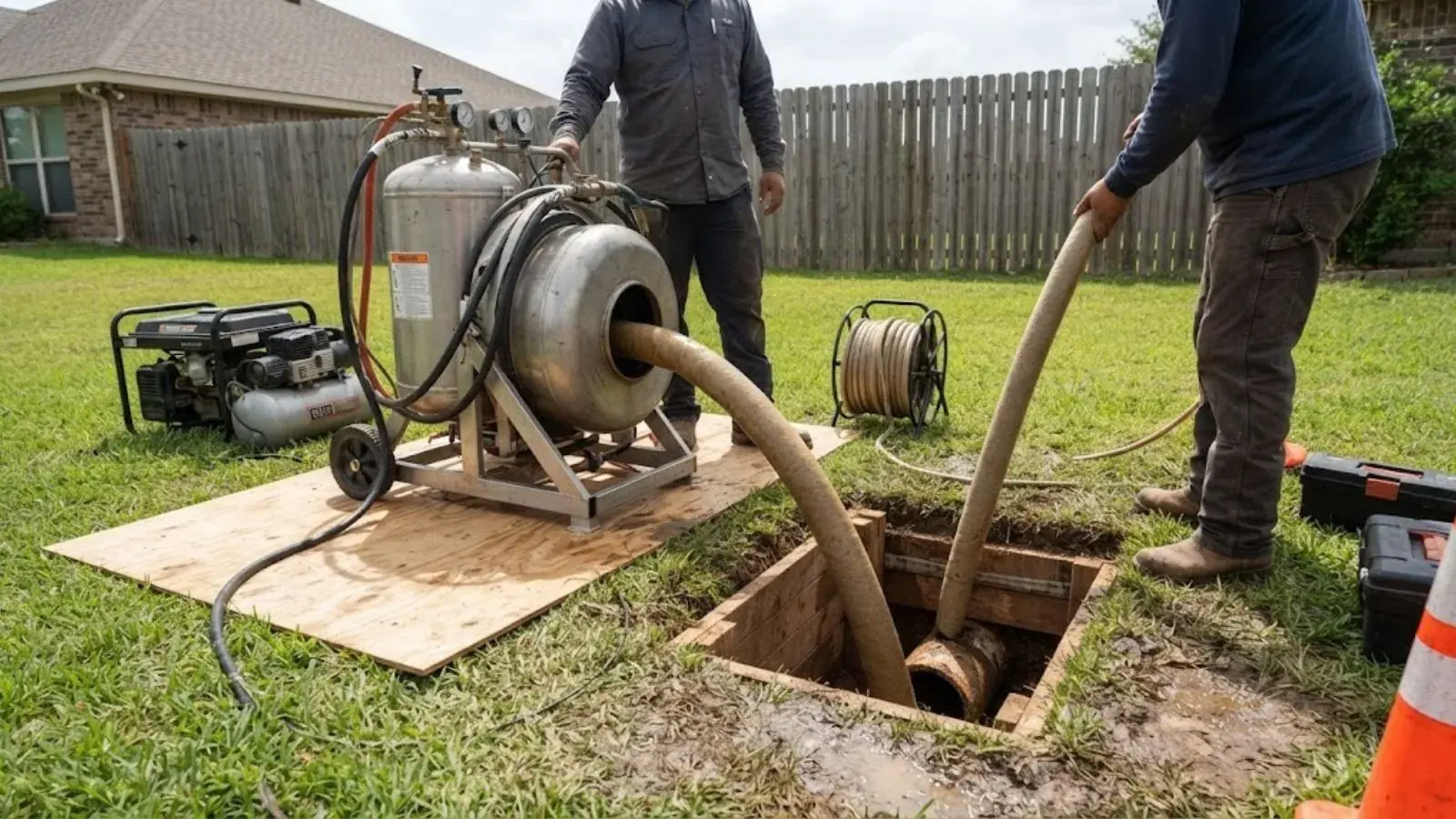
Pipe lining repairs a damaged sewer pipe from the inside. A flexible liner soaked in resin is pulled or inflated into the old pipe, then cured so that it hardens into a new pipe inside the old one. It can seal cracks, joints and root entry points without trenching the whole line.
It is not a cure for every problem. This guide explains how it works, when it fits and when the pipe needs replacement. Our sewer line repair page covers the other options.
How a pipe lining job works
The usual sequence:
- Run a camera through the line to confirm the damage and measure the length.
- Clean the pipe by cable or hydro jetting so the liner can bond.
- Prepare a liner cut to length and saturated with resin.
- Pull or invert the liner through an access point and inflate it against the pipe wall.
- Cure the resin with heat, light or time.
- Camera the line again to check the result and reopen connections.
Lining versus replacement
The camera decides.
| Condition | Lining fits | Replace instead |
|---|---|---|
| Cracks and open joints | Yes | No |
| Roots entering at joints | Yes, after cutting the roots | No |
| Pipe still round and in line | Yes | No |
| Collapsed or crushed pipe | No | Yes |
| Belly holding water | No | Yes |
| Severe offset | Rarely | Usually |
If a camera shows a collapsed pipe or a low spot that holds water, lining will not fix it.
Benefits and limits
Weigh both sides:
- Less digging, so lawns, driveways and patios are disturbed less.
- The liner can resist root entry at joints once cured.
- The inside diameter of the pipe shrinks slightly.
- Connections and laterals must be reopened carefully.
- The old pipe must be structurally sound enough to support the liner.
- Lining does not fix a pipe that has settled out of grade.
Soil movement and sewer pipes
According to the Texas Department of Licensing and Regulation, expansive soils swell and shrink with moisture, and that movement can stress foundations and the plumbing attached to them. In the Dallas and Fort Worth area, clay soils are common, so repeated cycles of wet and dry weather can shift pipe over time.
That is one reason a camera inspection is the first step. It shows whether the pipe has cracked, sagged or separated, and whether lining is a realistic option. See sewer inspection.
Source type: Texas Department of Licensing and Regulation guidance on foundations and soils.
What lining costs and what it saves
Lining involves specialized equipment and materials, so it is not always the cheapest option on paper. It can cost less than a full replacement once you add the cost of repairing landscaping, driveways and hardscape. We explain both prices so you can compare the total, not just the line item.
Pricing depends on the length, diameter, access and condition of the pipe. Call for your number.
Questions to ask a contractor
Ask what material the liner is, how long it is warrantied and who does the work. Ask whether the camera footage before and after will be shared. Ask how connections will be reopened and how the finished liner will be tested. Our team serves Southlake and Keller and answers these questions before any job.
A plain picture of the process
Think of a sleeve pulled inside a damaged pipe. The sleeve starts soft and wet with resin. Once it is pressed against the old pipe and cured, it hardens into a smooth new surface. Roots can no longer enter at the joints, and small cracks are sealed. The old pipe still carries the structural load, which is why its condition matters.
A good installer shows you the camera footage before and after, so you can see the result and keep it for your records.
Trenchless is not always trench-free
Lining reduces digging, but it still needs access points, usually at the cleanout or a small pit at one end. Some jobs need a pit at each end. We tell you where the access will be before work begins, and how the yard will be restored. If the pipe cannot be lined, we explain the options, including spot repair and replacement, so you can decide with the facts in front of you.
What to expect on installation day
The crew will clear the line, camera it, set up equipment at the access point and cure the liner. Water use is usually restricted while the liner cures, so plan around laundry and showers. After curing, the crew reopens connections and cameras the line again. You receive footage and notes.
Ask how long the cure takes, how long water use is limited and what to do if you notice a smell or a slow drain afterward. A professional crew answers these without hesitation.
Want to know if lining fits your sewer? Call for a camera check.
Call (817) 601-6266Pipe lining questions
It depends on the materials and the condition of the host pipe. Ask for the warranty terms in writing.
No. A collapsed or bellied pipe needs replacement or a spot repair.
Yes. The camera shows whether the pipe is suitable.
Expansive clay soils swell and shrink with moisture, which can shift pipes and foundations over time.
Yes, see Keller.